ELASTIC
Efficiently Learning to Adaptively Scale Test-Time Compute for Generative Control Policies
Overview
Diffusion and flow policies can spend extra test-time compute in two ways: more denoising steps (sequential) or more candidate actions (parallel). Which one helps depends on the task, the state, and the policy.
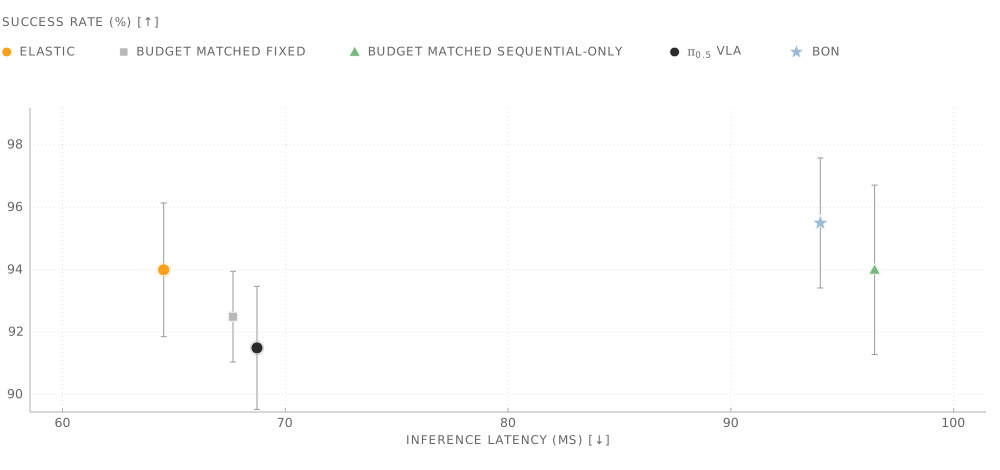
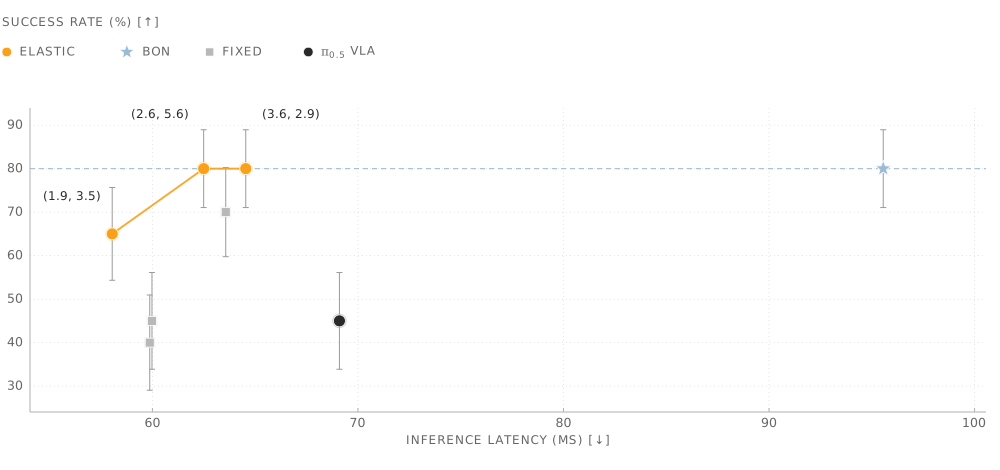
ELASTIC learns this with reinforcement learning. For a frozen policy, it learns a state-dependent schedule that sets sequential depth and parallel width together, in one decision per denoising step. On a real robot, it matches Best-of-10 success with 34% less latency.
Method
A meta-policy watches the candidate actions as they denoise and, at each step, chooses how far to advance each one, or prunes it. It is trained on task success minus a compute cost.
Allocating during denoising
Each marker is a candidate. As they denoise, red is pruned, green is slowly denoised, and yellow advances with a larger step size. Then verifier picks the best finished candidate.
The right amount of samples to keep, and the right step size to advance each, is not obvious. ELASTIC learns to adapt this based on the environment state and the denoising samples themselves to maximize task success minus a compute cost.
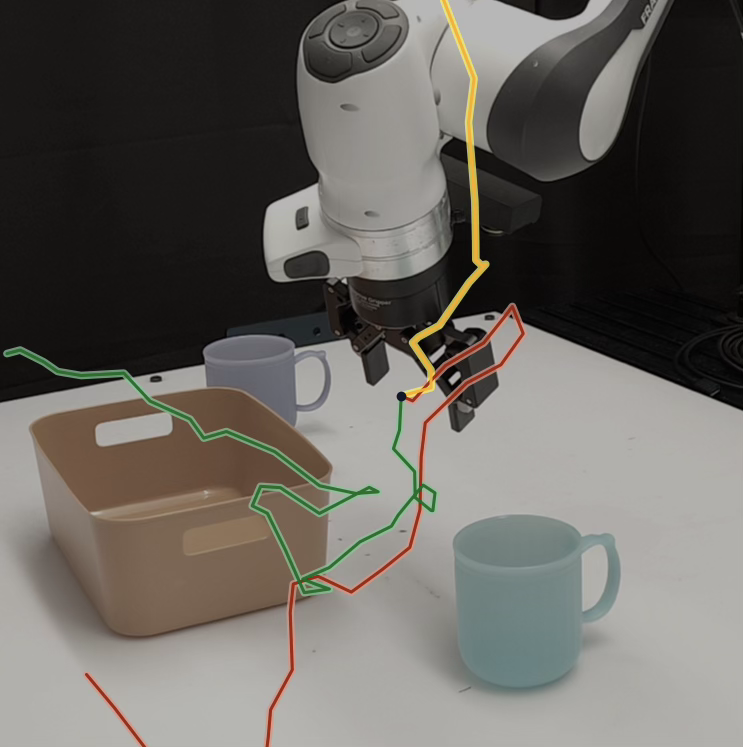
Insufficient compute along both axes lead to different failure modes
Too few steps can lead to imprecise grasps or placing failures, while too few samples can result in sampling a spurious mode and reaching for the wrong mug.
Results
Diffusion Policy
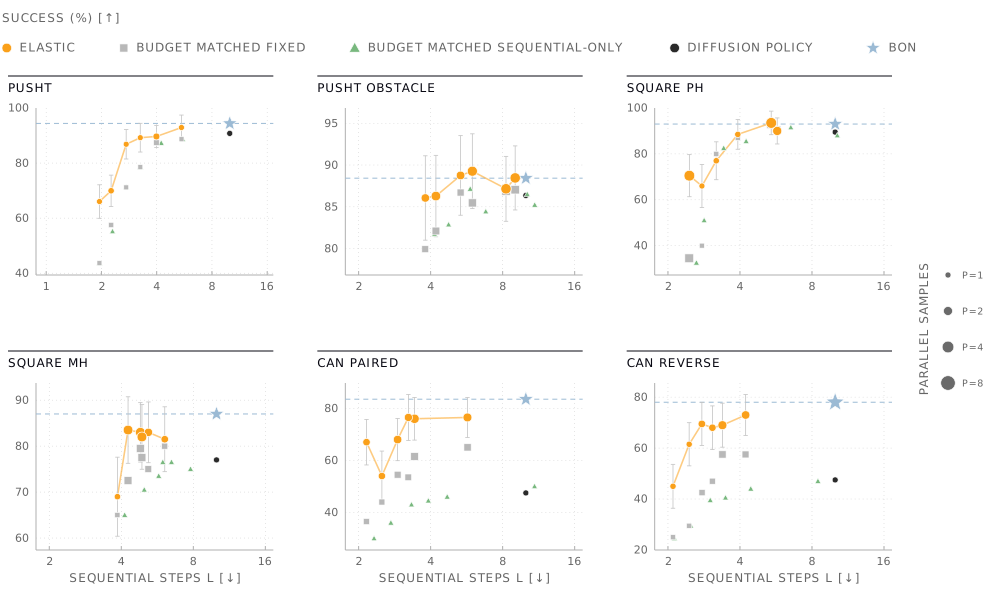
Each orange point is a meta-policy trained at a different compute cost. At matched compute it beats Fixed and Sequential-only, and often approaches Best-of-N with far fewer steps.
π₀.₅ VLA on LIBERO-10
Matches Sequential-Only Scaling with 6% less latency than the base policy.
π₀.₅ VLA on Real-World Mug Task
Matches Best-of-10 success with 34% less latency.
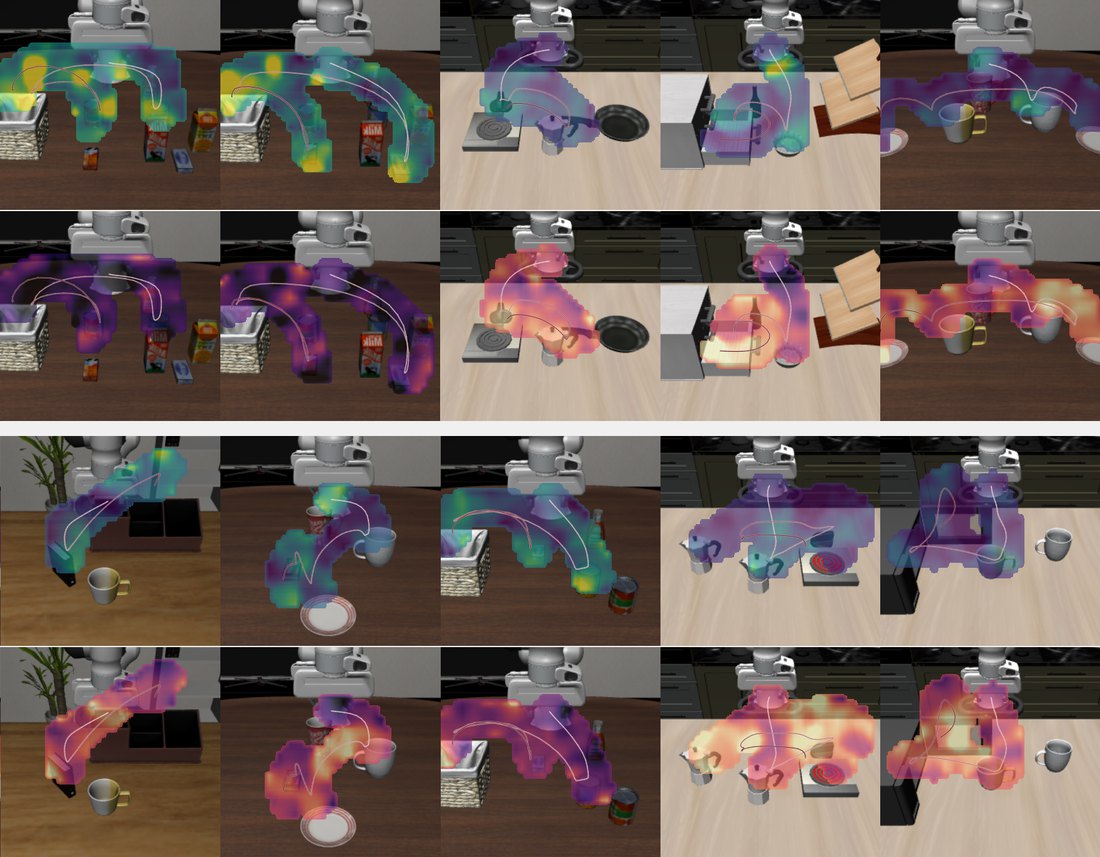
Browse rollouts
Execution
Allocation Timeline